
Finally defenseless
Our unnecessary tendency to defend ourselves against God.

Defensiveness is an uncomfortable posture to be in. It implies something coming at us, and usually something hostile. We defend ourselves against bullies, despair, criticism, all sorts of things. Often, we are not even aware of our defensiveness until after the fact. Upon reflection, we come to see that what, in the moment, we thought was confidence, humor, foresight, reason, organization, care, curiosity, etc. was really just defensiveness.
A number of years ago, I was on a silent retreat during Advent and I heard this prayer written by a Trappist monk:
May we all embrace one prayerful wish
that in his coming the Prince of Peace will
enter and fill our hearts with a new and
deepened resolve to live peace for and
with one another,
our hearts finally defenseless against the yearnings
of his quenchless love; his care at last
allowed to free a grieving world through
the lance of ineffable gaze,
the balm of his healing touch.
Amen.
It was the word “defenseless” that stuck out to me most. I have recalled it often in the eight years since that retreat, and especially during this season. What would it mean to be defenseless?
Here, the word implies that we tend to defend ourselves not only from hostile forces, but from a totally pacific one: the yearnings of God’s quenchless love. Why would we defend ourselves from that?
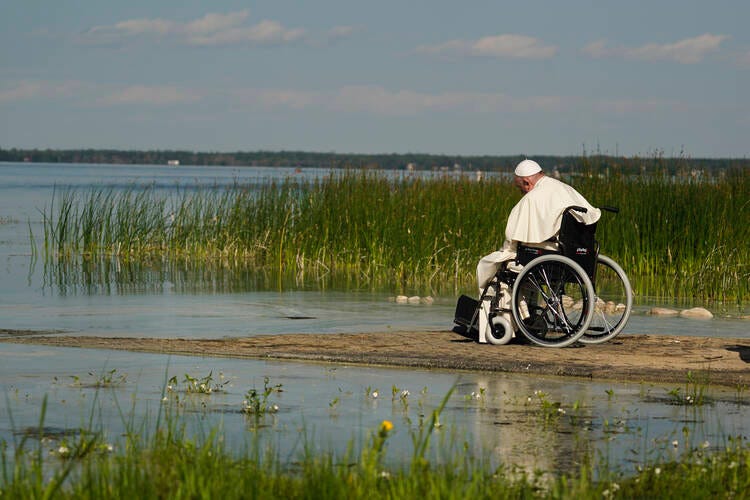
The type of “quenchless love” that God has is quite off-putting; it is not consistent with our usual way of proceeding. We’d like God to have a quenchable love, one that can be satisfied in some way by us. Often, our image of God implies someone who would like us to be performing well, behaving in certain ways, and that when we do live up to these expectations, we will quench his love, or satisfy his desires.
This sort of reciprocity, a God who is looking to be appeased, is one that we can be comfortable with. It mirrors our own tendency towards relationships or efforts to impress and do the right thing. This is the image of God that many of us are raised with and the understanding of society and human behavior that we were formed with: that our worth or value is somehow connected to our actions, our beliefs, our opinions.
But a God who yearns for us with a quenchless love is one who looks for us to welcome God without the usual defenses. It implies a reality where our value is not correlated to our actions, beliefs, or opinions.
The defenses we put up, paradoxically, can often be the best parts about us: our do-gooding, our praying, our virtue, our humility, our most socially-aware opinions. They come in many forms, however: addictions, harsh criticism or judgement of others, laziness, pleasure-seeking, gossip, controlling behaviors, etc.
All of these defenses, the seemingly good ones or the bad ones, can be cover for our utter discomfort with the kind of God we actually have—a God whose love is so pure that it is completely unchanged by anything we could ever do, good or bad.
Such unconditional love can be destabilizing and uncomfortable because it can leave us totally aware of our seeming unworthiness, it illuminates our insecurities, making them glaringly obvious. Thus, the defensiveness tends to be covering up for the reasons we think we couldn’t possibly be loved in such a free way.
This is also a love and a God who is so often silent, invisible, un-graspable, weak, seemingly powerless. And this is another reality we seek defense from–defense against the silence of God. The silence of God can be deafening at times. It is a silence, though, we must accept.
Earlier this year, I was teaching an online class about prayer to a group of high schoolers. I asked them, “Why do you think God is silent?”
Quite quickly, one brilliant student, (often quiet herself), responded: “God gives us freedom. If he spoke to us, it could impinge on our free will because we would be overpowered. If God told us what to do in such a way that was so obvious, we would lose our own freedom, because we really would have no choice.” Such wisdom.
God’s silence, God’s respect of our freedom, is what opens the doorway to a new way of living. It is one devoid of measuring up, but it is one that actually asks even more responsibility. Our responsibility is to make decisions, take actions, and live in a way that flows not from the mode of satisfying God, but from imitating God; from accepting God’s quenchless love, rather than trying to earn it.
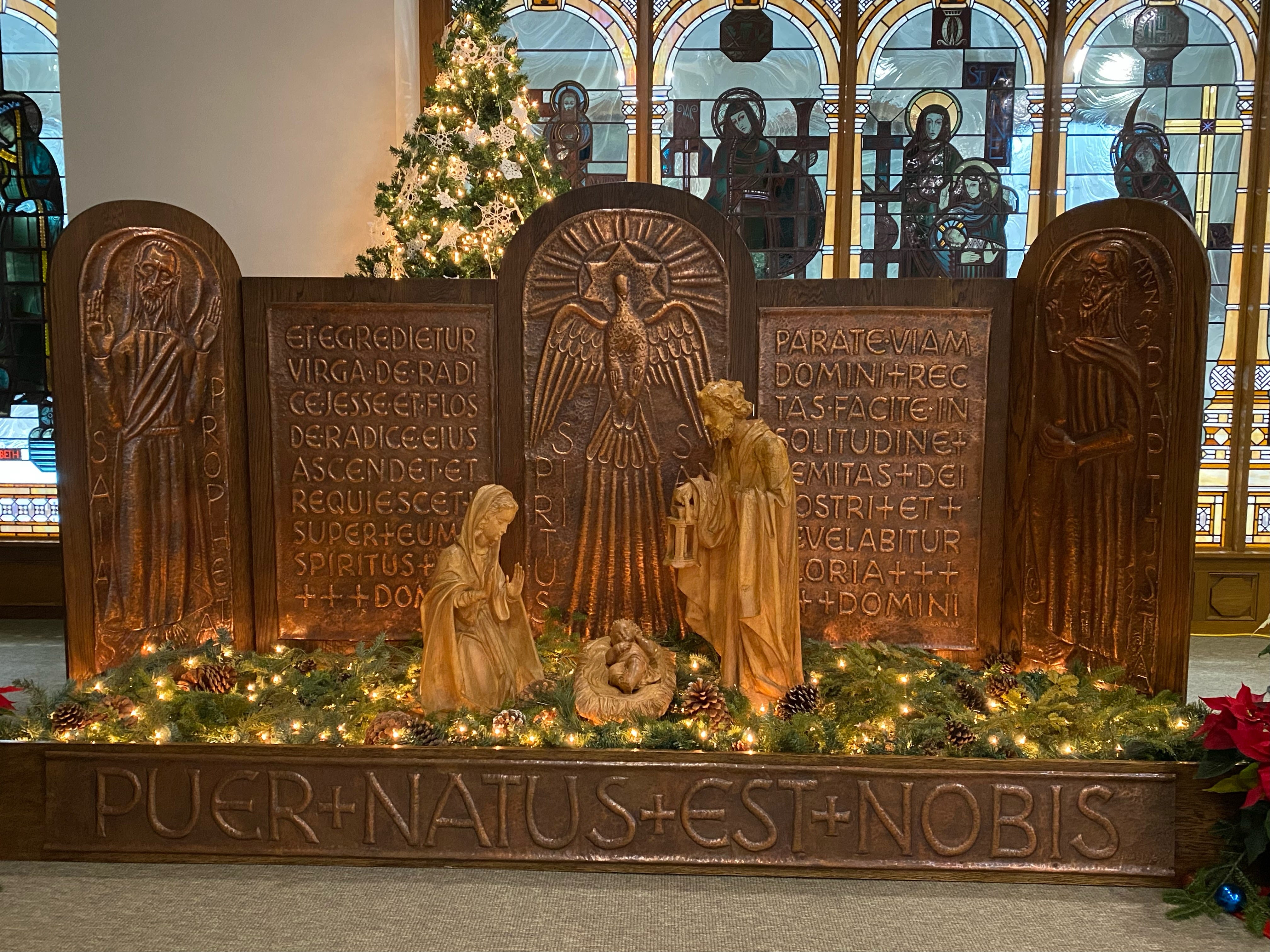
We are now in the last few days of Advent, approaching Christmas once again when we will celebrate God’s himself becoming defenseless in the poor child of Jesus. God saves by becoming defenseless. God wins by losing. God triumphs through weakness.
The invitation we have, once again, is to marvel at what sort of God we have. As St. Therese says, “A God who became so small could only be love and mercy.”
May the ineffable gaze of a child be the lance that heals us from our defenses–maybe only one of them, and maybe only for a day. It is a journey and God patiently walks with us.
I love you Billy. Your writings are so inspiring 💜